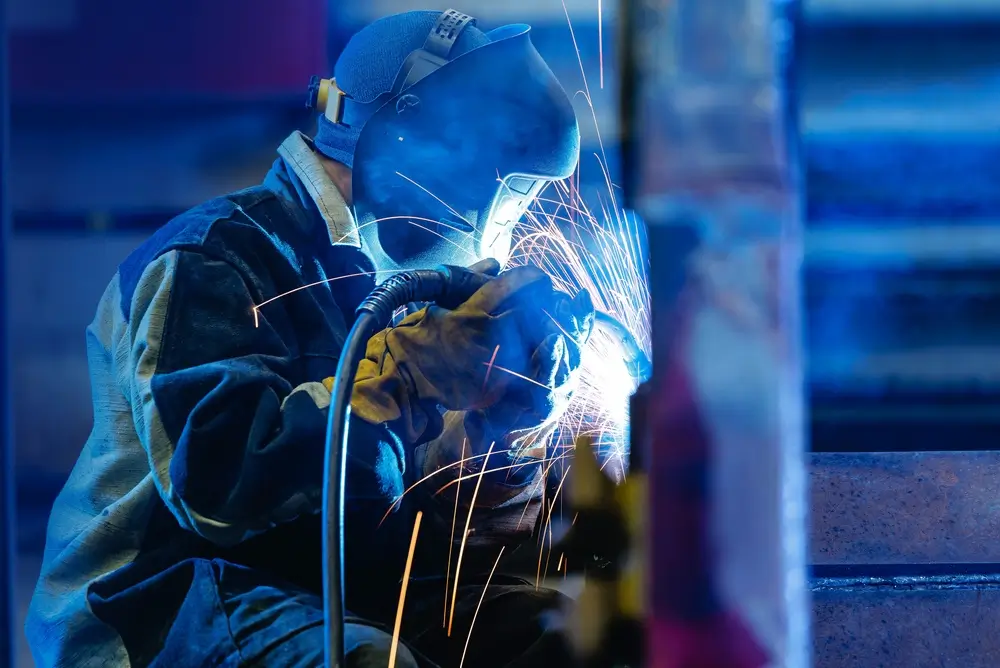
Welding is a highly skilled trade that plays a critical role in building and maintaining modern infrastructure. From bridges and buildings to pipelines and industrial machinery, welders are essential in shaping the physical world around us. Moreover, it is a hands-on profession that combines technical knowledge with practical expertise, making it both challenging and rewarding for individuals who prefer working in dynamic, real-world environments.
In recent years, the demand for welders has grown significantly across multiple industries, including construction, manufacturing, oil and gas, automotive, and infrastructure development. As global development continues and aging structures require maintenance and replacement, skilled welders are increasingly needed to support ongoing industrial and engineering projects.
Unlike many professional careers, welding does not always require a college degree. Instead, it is a trade where skills, trainings, and hands-on experience often matter more than formal academic education. However, proper training and technical knowledge are still essential for success in the field. Understanding welding techniques, safety practices, and equipment handling is critical for building a long-term career.
A welder is a skilled tradesperson responsible for joining metal parts together using high heat, pressure, or both. This process creates strong and permanent bonds between materials, making welding a vital part of construction, manufacturing, and repair work. Welders must be able to interpret technical drawings, follow precise instructions, and work with various tools and equipment to complete their tasks accurately.
Welders commonly work with a range of materials, including steel, aluminum, stainless steel, and other metal alloys. Each material requires different techniques and levels of precision, depending on the project and industry standards. For example, welding steel structures in construction may involve heavy-duty equipment, while welding aluminum parts in automotive or aerospace industries demands fine precision and advanced techniques.
The demand for welders spans across multiple industries. In construction, they help build buildings, bridges, and infrastructure. In manufacturing, welders are involved in producing machinery, tools, and equipment. The oil and gas industry relies on welders for pipeline construction and maintenance, while shipbuilding and automotive sectors also require specialized welding expertise.
Becoming a welder does not typically require a university degree, which makes it an accessible career path for many individuals. Instead, most employers focus on practical skills, training, and trainings rather than formal higher education. This makes welding a strong option for those who prefer hands-on work and want to enter the workforce without spending years in college.
A high school diploma or equivalent is usually the basic educational requirement to start a welding career. While higher education is not mandatory, having a strong foundation in certain subjects can be highly beneficial. Mathematics helps in measurements, calculations, and understanding welding specifications, while physics provides insight into heat, pressure, and material behavior. Technical drawing or blueprint reading is also valuable, as welders often need to interpret detailed diagrams before beginning their work.
There are also alternative pathways into the welding profession. Many aspiring welders choose technical schools, vocational training centers, or apprenticeships to gain structured learning and real-world experience. These programs are designed to teach both the theoretical and practical aspects of welding, allowing students to build job-ready skills more efficiently.
Training and training are essential steps in building a successful welding career. Many individuals enroll in welding trade schools or technical institutes that offer structured programs focused on different welding techniques, safety practices, and equipment handling. These institutions provide a strong foundation for beginners and help them transition into the workforce with confidence.
Hands-on training plays a major role in welding education. Unlike purely academic fields, welding requires significant practical experience to develop precision, control, and consistency. Training programs often include workshops where students practice welding under supervision, allowing them to improve their technique through repetition and real-time feedback.
One of the most recognized trainings in the industry is provided by the American Welding Society (AWS). AWS trainings validate a welder’s skills and demonstrate their ability to meet industry standards. These trainings are widely respected by employers and can significantly improve job opportunities.
To become a successful welder, a combination of technical and physical skills is essential. Welders must understand different welding techniques and be able to read blueprints or technical drawings to accurately complete projects. These skills ensure that work is done according to design specifications and industry standards.
Physical abilities are also important in this profession. Good hand-eye coordination helps maintain precision during welding, while stamina is needed for long hours of focused, sometimes physically demanding work. Attention to detail is critical, as even small mistakes can affect the strength and safety of a weld.
Problem-solving is another key skill, as welders often need to adjust techniques or troubleshoot issues on the spot. Since welding technology continues to evolve, continuous learning is equally important to stay updated with new tools, methods, and safety practices.
It is possible to become a welder with no prior experience, especially through entry-level opportunities. Many companies offer apprenticeships or training programs where beginners can learn while working under supervision. These roles help individuals gain real-world exposure while developing essential skills.
A common starting point is working as a helper or trainee welder. In this role, beginners assist experienced welders, prepare materials, and gradually learn basic techniques. Over time, they build confidence and move toward more advanced tasks.
Conclusion
Becoming a welder is a practical and accessible career path that focuses more on skills, training, and trainings than on formal academic degrees. With the right combination of technical knowledge, hands-on experience, and continuous learning, individuals can build a strong foundation in this high-demand trade. While it is possible to start with little to no experience, structured training programs, apprenticeships, and industry-recognized trainings play a crucial role in long-term success. Equally important is an understanding of workplace safety, including OSHA 10 and 30-Hour General Industry courses, which help ensure safe and professional work practices. Overall, welding offers stable career opportunities for those willing to learn, practice, and grow within the field.