Hazard Assessments:
Who Is Responsible & Why They Matter
Hazard assessments form a cornerstone of workplace safety. It systematically identifies potential dangers, evaluates risks, and implements controls to protect employees. In industries from construction and manufacturing to healthcare and offices, these assessments prevent injuries, illnesses, and fatalities while ensuring regulatory requirements. But who bears the primary responsibility for implementing them?
Understanding Hazard Assessments
A hazard assessment, also referred to as a risk assessment in some contexts, involves identifying hazards in the workplace, including anything that could cause harm, such as chemicals, machinery, ergonomic issues, slips, trips, falls, or psychosocial stressors. It then evaluates the likelihood and severity of harm and determines appropriate controls following the hierarchy of controls (elimination, substitution, engineering, administrative, and PPE).
Assessments are not one-time events.Proactive assessments help organizations move from reactive safety management to prevention.
During initial workplace setup, when new processes or equipment are introduced, after incidents, or periodically as required by regulations.
Elimination → Substitution → Engineering Controls → Administrative Controls → PPE
Physical, chemical, biological, ergonomic, and psychosocial risks across all industries.
Primary Responsibility: The Employer
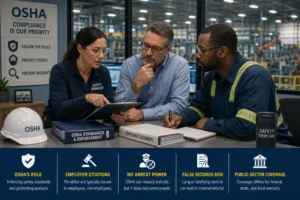
Under U.S. Occupational Safety and Health Administration (OSHA) standards, employers hold ultimate legal responsibility for conducting hazard assessments. OSHA's General Duty Clause and specific standards, such as 29 CFR 1910.132 for personal protective equipment (PPE), require employers to assess the workplace to determine if hazards are present or likely to be present.
Employers must:
- ✓Provide a workplace free from recognized hazards.
- ✓Examine conditions to ensure requirements with standards.
- ✓Ensure employees have and use safe tools and equipment.
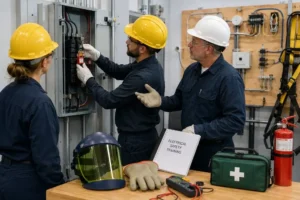
- ✓Document assessments, especially for PPE, with written training including the workplace evaluated, the person certifying it, and the date.
Key Roles in Hazard Assessment
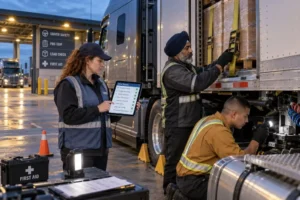
Employers do not always perform assessments personally. They often designate a "competent person", someone with sufficient training and authority to identify hazards and implement corrective measures. This could be a safety manager, supervisor, crew leader, or external consultant.
The competent person must understand the specific hazards of the job or site. For example, in construction or hot work environments, a qualified individual conducts specialized assessments. Employers ensure this person receives proper training and resources.
While employers bear primary responsibility, employees play a vital supporting role. Workers possess firsthand knowledge of daily tasks and often spot hazards that management might overlook. Many safety programs encourage employee participation through reporting near-misses, suggesting improvements, and joining safety committees.
However, employees are not legally responsible for conducting formal assessments unless specifically delegated and trained. Their duty focuses on following safe work practices and reporting concerns.
For small businesses, the owner often performs assessments directly. In larger organizations, they delegate execution while retaining accountability. In many jurisdictions following ISO 45001 or similar frameworks, the person in control of the workplace carries the duty.
Why Hazard Assessments Matter: The Statistics
The importance of proper hazard assessments becomes clear when examining the human and economic costs of inaction. According to the U.S. Bureau of Labor Statistics (BLS), private industry employers reported about 2.5 million nonfatal workplace injuries and illnesses in 2024, with an incidence rate of 2.3 cases per 100 full-time equivalent workers. There were roughly 5,070 fatal work injuries in 2024.
Globally, the International Labour Organization (ILO) estimates nearly 3 million workers die annually from work-related accidents and diseases (about 2.6 million from diseases and 330,000 from accidents). Agriculture, construction, forestry, fishing, and manufacturing account for a large share of fatal injuries.
Work-related injuries and diseases cost economies around 4-5% of global GDP. In the U.S., slips, trips, and falls, along with overexertion and struck-by incidents, remain leading causes of injuries, many preventable through thorough hazard assessments.
Studies show that organizations with strong safety programs, including regular assessments, experience significantly lower injury rates. For instance, proactive hazard identification and control have reduced falls and other incidents in high-risk sectors.
How to Conduct an Effective Hazard Assessment
Here are some ways to conduct effective hazard assessments:
Review incident reports, safety data sheets, equipment manuals, and employee feedback.
Conduct walkthroughs, focusing on routine and non-routine tasks.
Categorize physical, chemical, biological, ergonomic, and psychosocial risks.
Once hazards are identified, assess how likely they are to occur and how severe the outcome could be. A simple risk matrix (low, medium, high) can help prioritize.
Implementing controls is a critical step in reducing workplace risks and should follow the hierarchy of controls to ensure maximum effectiveness. This begins with elimination, which involves removing the hazard entirely from the workplace. If that is not feasible, substitution can be applied by replacing the hazard with a safer alternative.
Keep records and update assessments regularly or after changes. Tools like job safety analyses (JSAs), checklists, and software can streamline the process.
Benefits Beyond requirements
Effective hazard assessments boost morale, reduce absenteeism, improve productivity, and enhance reputation. Employees feel valued when their safety is prioritized, leading to lower turnover. In high-hazard industries, assessments are especially critical. Construction sites, for example, require frequent evaluations due to changing conditions.
Employees feel valued when their safety is prioritized.
Fewer injuries means fewer missed workdays.
Safe environments allow workers to perform at their best.
Organizations known for safety attract better talent and clients.
Valued employees stay longer, reducing hiring costs.
Conclusion
Employers are ultimately responsible for conducting hazard assessments, often delegating to competent persons while involving employees for comprehensive insights. This shared approach, grounded in legal requirements and best practices, saves lives and strengthens organizations.
Prioritizing hazard assessments is not just a regulatory checkbox; it is a moral and business imperative. By investing time and resources today, employers create safer, healthier, and more sustainable workplaces for tomorrow. Whether you run a small business or manage a large corporation, taking ownership of hazard assessments demonstrates commitment to your most valuable asset: your people.