Every year, OSHA releases a list of its most frequently cited workplace safety standards, highlighting areas where employers continue to struggle with compliance. Fall protection has remained at the top of this list for 15 consecutive years, making it a persistent concern, particularly in the construction industry. Falls can cause serious injuries and fatalities, yet many incidents are preventable when employers identify hazards and put appropriate safeguards in place.
Repeated violations often stem from gaps in job-site planning, improper equipment use, inadequate supervision, and a lack of awareness about fall hazards. Addressing these issues requires more than providing safety equipment. Employers must establish clear procedures, ensure workers understand how to protect themselves, and consistently enforce safe work practices.
Why Fall Protection Remains OSHA’s Most Cited Violation
Fall hazards are common in construction because workers regularly perform tasks on roofs, ladders, scaffolds, elevated platforms, and near open edges. Other industries can also expose employees to falls when work involves elevated surfaces or unprotected openings. OSHA’s fall protection standards establish requirements for protecting workers in these situations, but violations continue when safeguards are missing, improperly installed, or not used correctly.
Project deadlines, changing job-site conditions, and inconsistent supervision can make these hazards harder to manage. For example, a floor opening may be left uncovered while materials are moved, or workers may begin a roofing task before the required protective systems are in place. Employers may also overlook hazards when responsibilities are unclear or inspections are inconsistent. Preventing repeat violations requires employers to identify risks before work begins, provide suitable protection, and ensure safety procedures are followed throughout the project.
Common Causes of Fall Protection Violations
Fall protection violations often occur when employers fail to identify hazards, provide appropriate safeguards, or consistently enforce safety procedures. The following are common issues that can put workers at risk and lead to OSHA citations.
Missing or Inadequate Guardrails
Guardrails help prevent workers from falling off elevated platforms, roofs, and exposed edges. When guardrails are missing, improperly installed, or removed without suitable alternative protection, workers may be exposed to serious fall hazards.
Improper Use of Personal Fall Arrest Systems
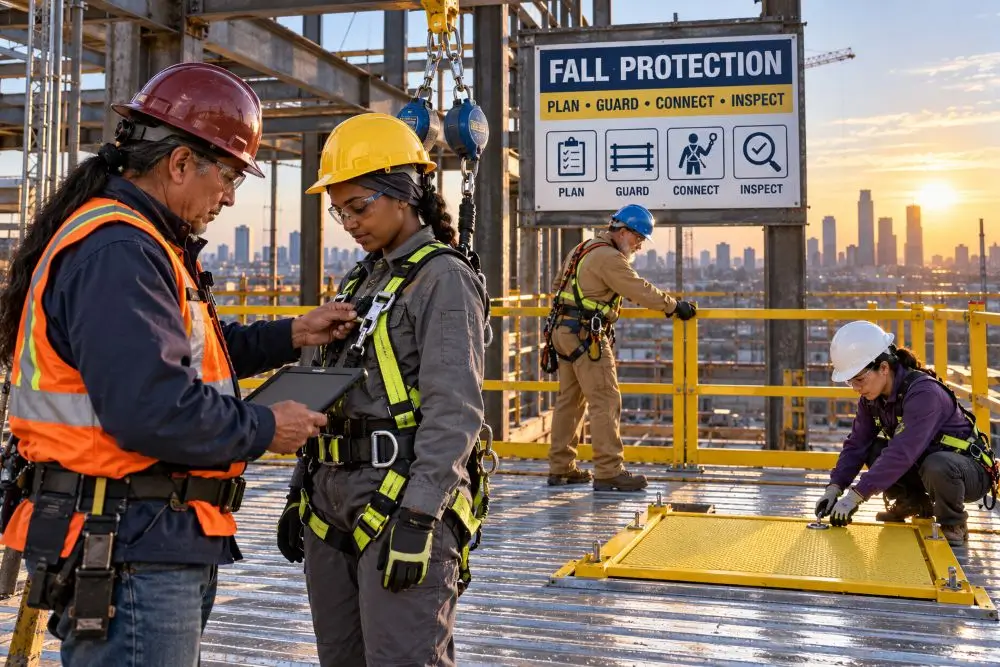
Personal fall arrest systems must be properly selected, inspected, and used to protect workers from falls. Incorrect connections, unsuitable anchor points, damaged equipment, or failure to use the system as required can make it ineffective when a fall occurs.
Unprotected Roof and Floor Openings
Roof openings, unfinished floors, and uncovered holes can create dangerous fall hazards. Employers may receive citations when openings are not properly covered, secured, or guarded, especially when workers move materials or work near these areas.
Inadequate Hazard Assessments
Employers need to identify fall hazards before work begins and reassess them as job-site conditions change. When planning overlooks exposed edges, unstable work surfaces, or changing site layouts, workers may begin tasks without the necessary safeguards.
Insufficient Employee Instruction
Workers need to understand the fall hazards associated with their tasks and how to use protective equipment correctly. When employers fail to provide required instruction or ensure workers understand safe procedures, mistakes can increase the risk of falls and violations.
Rushed Work and Poor Supervision
Pressure to meet deadlines can lead teams to skip inspections, temporarily remove safeguards, or start work before protection is ready. Without consistent supervision, unsafe practices may continue even when the appropriate equipment and procedures are available.
Inconsistent Equipment Inspections
Damaged harnesses, worn connectors, and improperly maintained safety equipment can compromise worker protection. Regular inspections and prompt removal of defective equipment help ensure protective systems are ready for use when needed.
The Risks of Ignoring Fall Hazards
Ignoring fall hazards can lead to serious injuries and fatalities, particularly when workers operate on roofs, scaffolds, ladders, or elevated platforms. A single fall can result in fractures, head injuries, spinal damage, or permanent disability. Even a seemingly minor gap in protection, such as a missing guardrail or an unsecured floor opening, can expose workers to life-changing harm. These incidents can also affect coworkers, families, and entire teams, making fall prevention an essential part of workplace safety.
Fall-related incidents can also cause project delays, OSHA citations, increased insurance costs, medical expenses, and potential legal liabilities. When a serious incident occurs, employers may need to pause work while they investigate and implement corrective measures. Repeated violations can further damage a company's reputation and undermine employee confidence in its safety practices. Identifying hazards early, providing appropriate safeguards, and enforcing safety procedures consistently can help reduce these risks and protect both workers and business operations.
What Employers Can Do to Prevent Violations
Employers can reduce fall hazards by planning work carefully, identifying risks before tasks begin, and ensuring appropriate safeguards are in place. Regular inspections, clear safety procedures, and consistent supervision help prevent small gaps in protection from becoming serious hazards.
Assess Hazards Before Work Begins
Inspect the work area for exposed edges, roof and floor openings, unstable surfaces, and other potential fall hazards. Reassess conditions when the work environment changes, and make sure workers understand the risks before starting a task.
Install Appropriate Guardrails and Covers
Use suitable guardrails, safety nets, or properly secured covers where required to protect workers from falls. Covers should be capable of supporting the expected loads and secured against accidental displacement. Select protective measures based on the task, site conditions, and applicable OSHA requirements.
Provide Suitable Personal Protective Equipment
When required, provide appropriate personal fall arrest systems, including compatible harnesses, connectors, and suitable anchorage. Ensure workers understand how to use the equipment correctly and that systems are selected and configured for the hazards present.
Inspect and Maintain Safety Equipment
Inspect fall protection equipment before use and follow manufacturer instructions for maintenance and removal from service. Damaged or defective equipment should not be used. Employers should also ensure protective systems are installed correctly and remain effective as work progresses.
Provide Effective Worker Instruction
Fall protection training helps workers recognize hazards, understand workplace procedures, and use protective systems correctly. Employers should provide instruction required by applicable OSHA standards and make sure it reflects the hazards workers may encounter. Additional job-specific guidance may be necessary when tasks or site conditions change.
Enforce Safe Work Practices
Supervisors should verify that required safeguards are in place before work begins and address unsafe conditions promptly. Regular site inspections, pre-shift safety discussions, and clear accountability help keep safety procedures consistent, even when projects face tight deadlines.
Conclusion
Fall protection remains a persistent workplace safety challenge because hazards can be overlooked, equipment may be used incorrectly, and safety procedures are not always consistently enforced. Employers can reduce the risk of violations by identifying hazards before work begins, providing appropriate protective systems, inspecting equipment, and ensuring workers understand safe work practices.
Preventing falls requires ongoing attention from employers, supervisors, and workers. By making safety planning part of daily operations, addressing hazards promptly, and following applicable OSHA requirements, organizations can protect employees from serious injuries, avoid preventable citations, and create safer work environments.