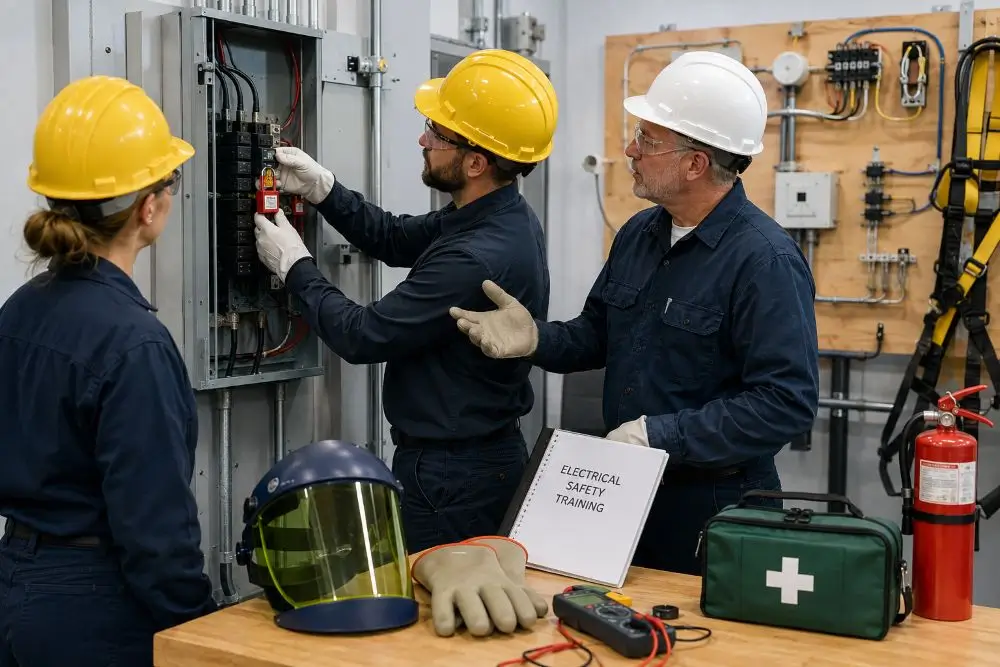
Electricians work around energized equipment, electrical systems, tools, and jobsite hazards that can lead to serious injuries when proper safety procedures are not followed. Safety training helps electricians recognize these risks, follow required precautions, and respond appropriately during emergencies. While not every safety course is legally required for every electrician, certain certifications and training programs can strengthen workplace safety knowledge and help meet employer or project requirements. Online courses can also provide a convenient way for electricians to complete training while managing demanding work schedules. The following safety certificates are worth considering for electricians seeking to improve their skills and workplace readiness.
OSHA 10-Hour General Industry
OSHA 10-Hour General Industry training introduces electricians to fundamental workplace safety practices and helps them recognize common hazards they may encounter on the job. The course typically covers topics such as electrical hazards, personal protective equipment (PPE), hazard communication, emergency procedures, and safe work practices. Although electricians may work in different environments, understanding general OSHA requirements can help them identify unsafe conditions and make better safety decisions.
The training is particularly useful for electricians who work in industrial facilities, maintenance environments, manufacturing plants, or other general industry settings. It can also provide a strong foundation for understanding workplace safety responsibilities before moving on to more specialized electrical safety training.
Electrical Safety and Lockout/Tagout (LOTO)
Electrical safety and Lockout/Tagout (LOTO) training is especially important for electricians who work with energized equipment, electrical panels, machinery, and other energy sources. The course teaches workers how to identify electrical hazards, de-energize equipment, isolate hazardous energy, and verify that systems are safely shut down before work begins. It also covers the proper use of locks, tags, and other energy-control procedures to prevent accidental startup or energization.
This training helps electricians understand how to protect themselves and others when performing installation, maintenance, repair, or servicing work. Depending on the workplace and job duties, LOTO training may also help employers meet applicable OSHA safety requirements.
Electrical Arc Flash Awareness
Electrical Arc Flash Awareness training helps electricians understand the causes and dangers of arc flash incidents, which can result in severe burns, blast injuries, and other serious harm. The course typically covers arc flash hazards, approach boundaries, appropriate PPE, and safe work practices around energized equipment. This training helps electricians recognize high-risk situations and take appropriate precautions before performing electrical work.
Applying Electrical Standards
Applying Electrical Standards training helps electricians understand how to interpret and apply relevant electrical codes, standards, and safety requirements during their daily work. It may cover proper installation practices, electrical equipment requirements, grounding, wiring, and compliance with applicable safety standards. For electricians, this knowledge is important because following established standards helps reduce electrical hazards, prevent improper installations, and maintain safer worksites. It can also help electricians make informed decisions when working on different projects and ensure their work meets required safety and compliance expectations.
Electrical Safety for Construction: Power Lines and Lockout/Tagout
This course teaches electricians how to work safely around power lines and hazardous energy sources on construction sites. It covers basic precautions such as maintaining safe distances, de-energizing equipment, and following Lockout/Tagout procedures. This training is important for electricians because construction environments can present changing electrical hazards, making proper energy control and awareness essential for preventing serious accidents.
Electrical Safety for Construction: Cord and Plug Connected Equipment
This course helps electricians understand the safe use and inspection of cord- and plug-connected electrical equipment on construction sites. It covers common hazards such as damaged cords, improper connections, and unsafe equipment use. This training is important for electricians because identifying these risks can help prevent electrical shocks, fires, and workplace injuries.
First Aid Module 06: Burns and Electrical Shock
This first aid module teaches workers how to respond to burns and electrical shock emergencies. It covers basic first-aid responses and appropriate steps to take while waiting for professional medical assistance. For electricians, this knowledge is especially valuable because their work can involve electrical hazards that may result in serious shocks or burns.
Fire Watch
Fire Watch training teaches electricians how to recognize fire hazards and monitor work areas during hot work or other activities that could create sparks or ignition sources. This is useful for electricians because electrical work can involve heat, sparks, or temporary equipment that may increase fire risks. Proper fire-watch practices help reduce the chance of fires and ensure workers know how to respond quickly.
Fall Protection (US)
Fall Protection training helps electricians understand common fall hazards and the proper use of fall protection systems when working at heights. It covers safe practices involving ladders, scaffolds, elevated platforms, and other work areas. This training is important because electricians may frequently work above ground level during installations, repairs, and maintenance.
Confined Space Hazards
Confined Space Hazards training introduces electricians to the risks associated with entering or working around confined spaces. It covers hazard identification, safe entry practices, atmospheric risks, and emergency procedures. For electricians working in areas such as tanks, utility spaces, or other restricted locations, this training helps them recognize dangerous conditions and work more safely.
Conclusion
Safety training can help electricians recognize workplace hazards, follow proper procedures, and respond effectively to emergencies. From electrical safety and Lockout/Tagout to fall protection, first aid, and confined space awareness, each course can provide valuable knowledge for working safely in different environments. While specific training requirements may vary by job and employer, keeping safety skills up to date can improve workplace readiness and confidence. If you're an electrician looking for work, sign up with American Recruits to discover job opportunities near your location and connect with employers looking for skilled workers.