A plays a critical role in enforcing workplace safety standards and ensuring employers provide safe and healthy working conditions. However, many employees and employers are unsure about the extent of OSHA’s enforcement authority, leading to questions about whether the agency can issue fines directly to workers or even make arrests.
The answer is more nuanced than many people assume. While OSHA has the authority to investigate workplace safety violations and impose penalties in certain situations, its enforcement powers are primarily directed toward employers rather than individual employees. Understanding how OSHA’s authority works can help both employers and workers better navigate their rights and responsibilities during workplace safety inspections.
Does OSHA Have the Power to Arrest Anyone?
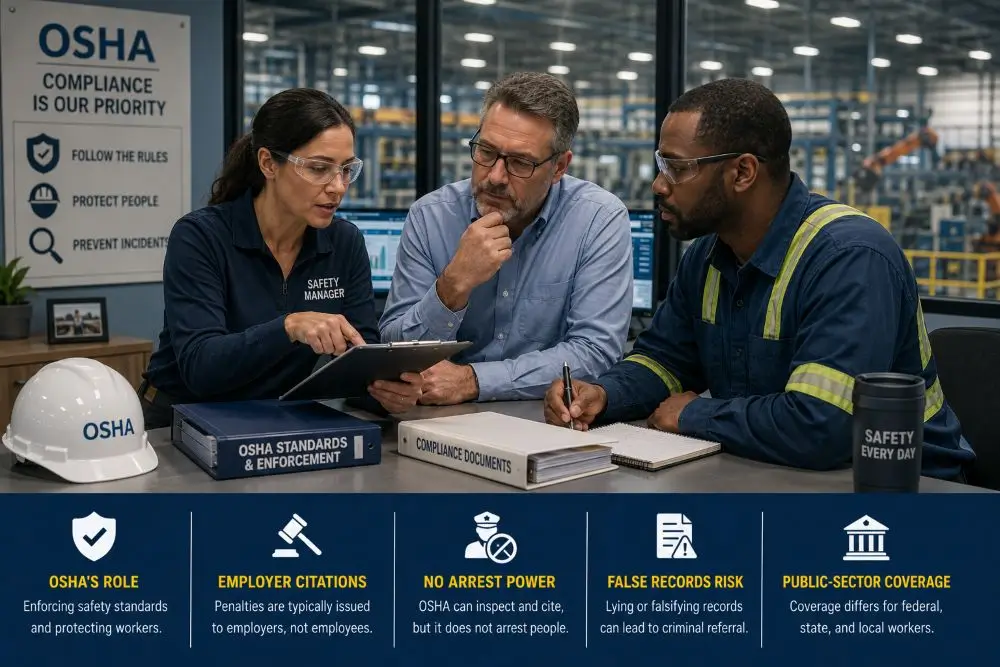
No, OSHA does not have the authority to arrest employees, employers, or any other individuals. OSHA is a regulatory agency responsible for enforcing workplace safety and health standards through inspections, investigations, and civil penalties. Its primary role is to ensure compliance with safety regulations rather than carry out criminal law enforcement.
However, if an OSHA investigation uncovers evidence of criminal conduct - such as willful violations that result in a worker’s death, intentional falsification of records, or obstruction of an investigation - the case may be referred to the appropriate law enforcement authorities or the U.S. Department of Justice. While OSHA itself cannot make arrests, criminal charges and jail time may result from legal action taken by the courts in certain circumstances.
Can a Manager, Supervisor, or Executive Be Held Personally Liable?
In most cases, OSHA citations and penalties are issued to the employer rather than individual managers, supervisors, or executives. However, company leaders are responsible for ensuring workplace safety policies are followed and that employees are provided with a safe working environment. Failing to meet these responsibilities can expose the organization to significant penalties and legal consequences.
Although OSHA generally does not impose personal fines on company officials, individuals may still face legal consequences if they knowingly participate in willful safety violations or other unlawful conduct. Employers and management should take an active role in maintaining compliance to reduce risks and promote a culture of workplace safety.
Can You Go to Jail for Lying to an OSHA Investigator or Falsifying Records?
Yes, individuals may face criminal penalties if they knowingly provide false information to an OSHA investigator or intentionally falsify required safety records. While OSHA itself cannot sentence someone to jail, such actions may violate federal law and can lead to criminal prosecution by the appropriate authorities.
Examples include submitting fraudulent injury and illness records, making false statements during an investigation, or destroying evidence related to a workplace incident. Providing accurate information and cooperating with OSHA investigations is essential to maintaining compliance and avoiding serious legal consequences.
Does OSHA Treat Public Sector (Government) Employees Differently?
Yes, OSHA’s coverage of public-sector employees differs from its coverage of private-sector workers. Under the federal Occupational Safety and Health Act, OSHA generally does not have jurisdiction over state and local government employees. .Instead, workplace safety for these employees is determined by whether their state operates an OSHA-approved State Plan. These state-run programs must provide protections that are at least as effective as federal OSHA standards and often cover state agencies, public schools, municipalities, and other local government employers.
Federal government employees are also treated differently. Rather than receiving OSHA citations in the same way as private employers, federal agencies are required to maintain safe and healthful workplaces under separate provisions of the Occupational Safety and Health Act. Although OSHA can inspect federal workplaces and make recommendations or issue notices of unsafe conditions, enforcement procedures differ from those used for private-sector employers.
As a result, the level of OSHA protection for public-sector employees depends on where they work and the type of government employer they have. Employers and workers in the public sector should understand the safety requirements that apply to their jurisdiction to ensure compliance and maintain a safe working environment.
Conclusion
OSHA’s role is to promote safer workplaces and ensure employers take appropriate steps to protect their employees. While OSHA cannot typically arrest individuals or hold every employee personally responsible for workplace violations, serious misconduct such as falsifying records or intentionally violating safety requirements can lead to legal consequences.
Understanding OSHA’s authority helps both employers and employees know their rights and responsibilities. By following safety standards, maintaining accurate records, and cooperating during inspections, organizations can reduce risks and create a safer workplace for everyone.