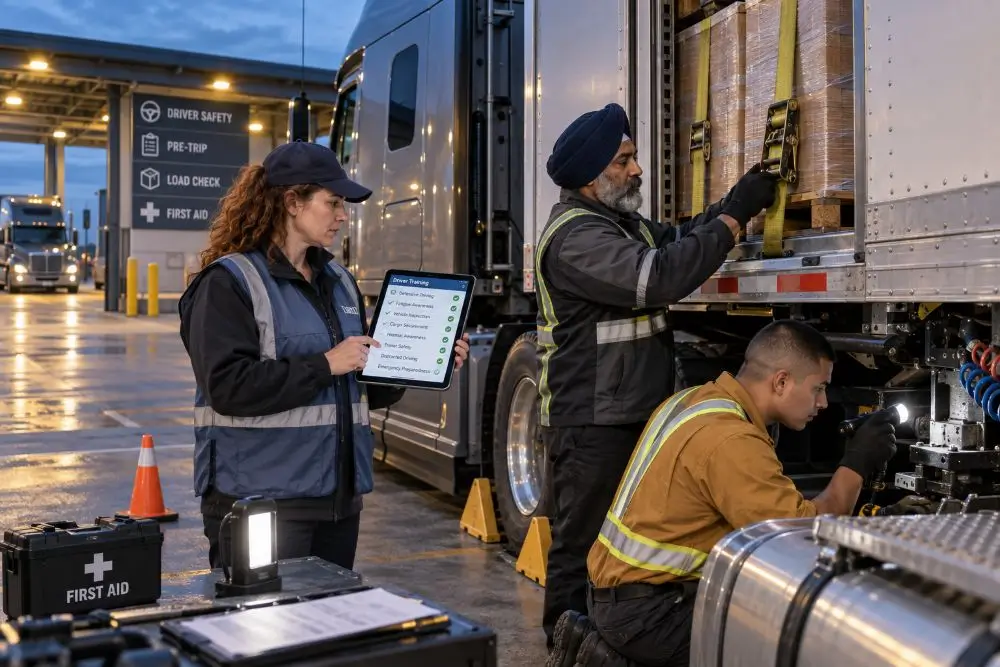
Truck drivers face a wide range of safety challenges every time they get behind the wheel, from heavy traffic and long driving hours to changing weather and vehicle-related hazards. Proper safety training can help drivers recognize these risks, make safer decisions, and respond appropriately to situations that can develop on the road.
The following online safety courses cover important areas of truck-driving safety, including defensive driving, vehicle hazards, emergency preparedness, and other practices that can help drivers stay safer while performing their work.
Defensive Driving: Large Vehicles
Driving a large commercial vehicle requires more than basic knowledge of traffic rules. Truck drivers need to account for larger blind spots, longer stopping distances, wider turns, changing road conditions, and the actions of surrounding motorists. Defensive driving training can help drivers recognize these challenges and make safer decisions before a potentially dangerous situation develops.
The OSHA Educational School Defensive Driving: Large Vehicles course provides training focused on the safety considerations involved in operating larger vehicles. It can help truck drivers strengthen their awareness of road hazards, improve defensive driving practices, and better manage the risks they encounter during everyday driving.
Driver Fatigue (US)
Long hours behind the wheel, overnight schedules, and insufficient rest can leave truck drivers fatigued and less able to respond to changing road conditions. Fatigue can affect alertness, reaction time, concentration, and decision-making, increasing the risk of mistakes while driving.
The OSHA Educational School Driver Fatigue (US) course helps drivers understand the risks associated with fatigue and the importance of managing tiredness while operating a vehicle. The training can support safer driving habits by helping workers recognize fatigue-related risks before they affect their ability to drive safely.
Load Securement and Distribution (US)
Cargo that is not properly secured or distributed can shift during transit, affecting vehicle balance, handling, and stability. Truck drivers need to understand how the type, weight, and placement of a load can influence vehicle performance and create hazards during braking, turning, or sudden changes in speed.
The OSHA Educational School Load Securement and Distribution (US) course focuses on the safety principles involved in securing and distributing cargo. For truck drivers, this training can reinforce the importance of checking loads and understanding how proper cargo management contributes to safer transportation.
Distracted Driving
Truck drivers need to maintain their full attention on the road, particularly because large vehicles require more time and space to maneuver safely. Distractions such as mobile phones, navigation systems, eating, adjusting controls, or interacting with other devices can take a driver's attention away from traffic and delay their response to changing conditions.
The OSHA Educational School Distracted Driving course helps drivers understand how common distractions can affect safe vehicle operation. The training can reinforce practical habits for staying focused behind the wheel and reducing distractions during work-related driving.
Avoiding Rear-end Collisions - Light Vehicles (US)
Rear-end collisions can occur when drivers follow too closely, fail to anticipate traffic changes, or do not have enough time to react to a vehicle slowing or stopping ahead. Maintaining an appropriate following distance and staying alert to traffic patterns are important defensive driving practices for reducing these risks.
Although this course focuses on light vehicles, the principles of maintaining space and anticipating traffic changes can reinforce important road-safety habits. The OSHA Educational School course provides guidance on avoiding rear-end collisions and making safer decisions when responding to changing traffic conditions.
Safe Vehicle Operations (US)
Safe vehicle operation depends on more than knowing the rules of the road. Truck drivers need to remain aware of their surroundings, operate their vehicles responsibly, and make sound decisions as conditions change. This is especially important when navigating traffic, work zones, unfamiliar routes, or challenging road conditions.
The OSHA Educational School Safe Vehicle Operations (US) course reinforces essential practices for operating vehicles safely and maintaining situational awareness. For truck drivers, it can serve as a practical training resource for strengthening responsible driving habits and reducing preventable risks on the road.
Aggressive Driving and Road Rage Awareness
Heavy traffic, delays, and interactions with impatient or aggressive motorists can create stressful situations for professional drivers. Truck drivers can reduce their exposure to these risks by remaining calm, avoiding confrontational behavior, maintaining appropriate space, and focusing on safe driving rather than reacting to other motorists.
The OSHA Educational School Aggressive Driving and Road Rage Awareness course addresses the risks associated with aggressive behavior on the road and provides guidance for recognizing and managing these situations. The training can help drivers develop a calmer approach to challenging encounters and make safety-focused decisions when road conditions become stressful.
HAZMAT Transportation Overview (US
Transporting hazardous materials requires drivers to understand the risks associated with different types of loads and the precautions needed during transportation. Proper awareness is important when handling, loading, securing, and transporting materials that could create additional hazards in the event of a spill, leak, fire, or collision.
The OSHA Educational School HAZMAT Transportation Overview (US) course introduces key safety considerations for transporting hazardous materials. It can help truck drivers build a stronger understanding of HAZMAT-related risks and the safe practices expected when working with regulated loads.
Towing Trailers (US)
Towing a trailer changes how a vehicle handles and requires drivers to account for factors such as added weight, longer stopping distances, wider turns, and reduced maneuverability. Proper coupling and trailer checks are also important for maintaining control and preventing avoidable incidents during travel.
The OSHA Educational School Towing Trailers (US) course covers important safety considerations associated with towing and trailer operation. For truck drivers, the training can reinforce good practices for coupling, maneuvering, braking, and maintaining control when operating vehicles with trailers.
First Aid - Basics
Truck drivers may spend significant periods on the road, sometimes far from immediate medical assistance. Knowing basic first-aid practices can be valuable when responding to minor injuries or unexpected emergencies at a roadside location, loading area, job site, or other workplace setting.
The OSHA Educational School First Aid - Basics course provides an introduction to fundamental first-aid principles and emergency response practices. This training can give truck drivers greater confidence in recognizing an emergency, providing appropriate initial assistance, and responding safely while professional help is being arranged.
Conclusion
Truck drivers face a wide range of risks on the road, at loading areas, and during vehicle-related tasks. The right safety training can help them recognize hazards, make responsible decisions, and respond more effectively when unexpected situations arise.
The courses from OSHA Educational School provide practical training across key areas such as defensive driving, fatigue, cargo handling, hazardous materials, trailer operation, and emergency response. Combining online safety training with safe driving practices can help truck drivers build stronger habits and support a safer working environment.