
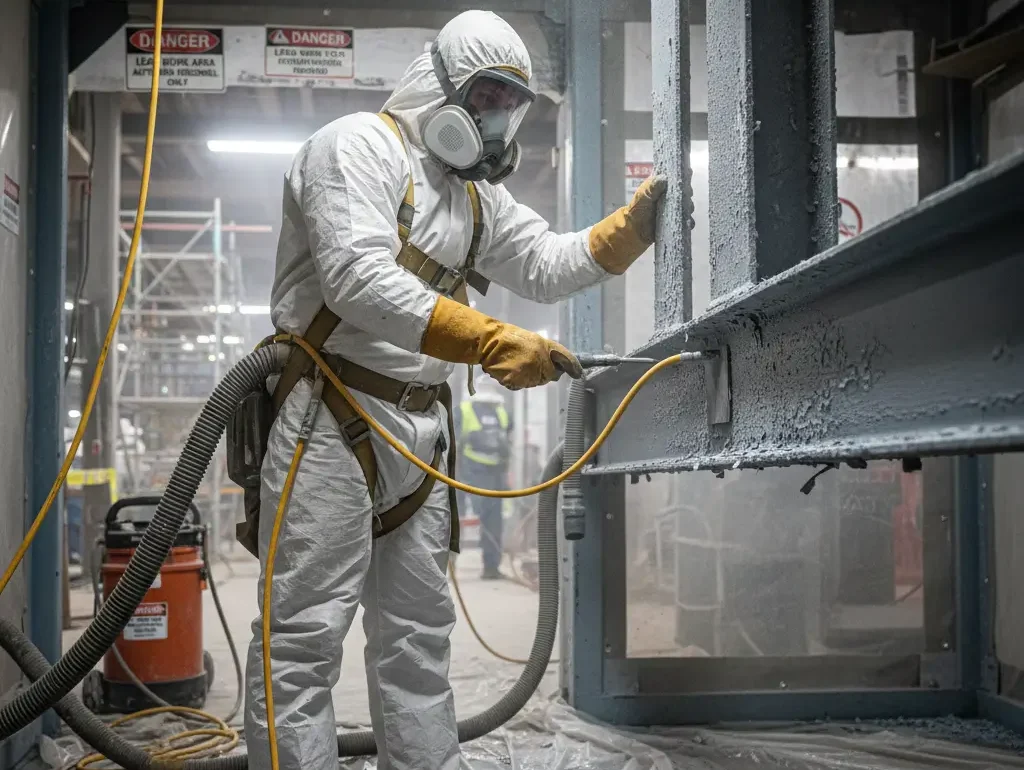
Lead exposure is still a major workplace hazard, especially in jobs where dust, fumes, or old materials are disturbed.
Workers in construction, demolition, manufacturing, battery recycling, painting, and repair work face some of the highest risks.
Even small amounts of lead can cause serious long-term health problems, which makes proper safety measures essential.
OSHA plays a key role in reducing these risks by setting strict standards for exposure, training, and protective practices.
Understanding these rules helps employers keep workplaces safe and prevents workers from getting sick.
Understanding Lead Poisoning in the Workplace
Lead poisoning occurs when lead enters the body through inhalation or ingestion, usually from dust, fumes, or contaminated surfaces found in many industrial job sites. Once absorbed, lead builds up in the bloodstream and tissues, causing damage over time.
Short-term exposure can lead to headaches, fatigue, stomach pain, and irritability, while long-term exposure may result in serious neurological damage, kidney problems, high blood pressure, and reproductive complications.
Workers may not notice symptoms immediately, which makes the hazard even more dangerous.
Even low levels of exposure can accumulate and cause harm, which is why OSHA stresses strict controls and consistent monitoring in any workplace where lead is present.
OSHA Standards on Lead Exposure
OSHA sets strict regulations to protect workers from lead hazards through its general industry standard (29 CFR 1910.1025) and construction standard (29 CFR 1926.62).
These standards define the Permissible Exposure Limit (PEL), which is the maximum amount of lead a worker can be exposed to during an 8-hour shift, and the Action Level, which triggers mandatory protective measures and monitoring when exposure reaches half the PEL.
Employers are required to implement regular air monitoring, medical surveillance, and employee training to ensure safety.
Additionally, the standards mandate the use of personal protective equipment (PPE), proper hygiene facilities, and workplace practices to minimize lead exposure.
Compliance with these standards is crucial for preventing acute and chronic lead-related health issues.
Identifying Sources of Lead Exposure at Work
Lead exposure can occur in many workplace settings, often without workers realizing it.
It is commonly generated during activities that disturb lead-containing materials, such as painting, welding, sanding, cutting pipes, or handling batteries.
Dust, fumes, and particles from these tasks can be inhaled or ingested, creating serious health risks over time.
Recognizing where and how lead exposure happens is the first step toward effective prevention.
Employers should conduct hazard assessments and monitor work areas to identify high-risk tasks and ensure appropriate safety measures are in place.
Understanding these sources is essential for compliance with OSHA standards and for protecting employee health.
Common Job Tasks That Generate Lead Dust or Fumes
Lead can become airborne during various routine workplace activities. Jobs such as demolition, renovation, painting, or handling lead-containing materials often release lead dust or fumes, putting workers at risk of inhalation or ingestion.
Recognizing these tasks is the first step in preventing exposure and implementing proper safety measures.
Examples of Lead Exposure
Specific examples include abrasive blasting or sanding old lead-based paint, cutting or welding pipes with lead coatings, and handling batteries or lead-containing materials in manufacturing or recycling settings.
These activities are high-risk because they produce fine particles that can easily be inhaled or settle on surfaces, contaminating the work environment.
Importance of Hazard Assessments and Air Monitoring
Conducting thorough hazard assessments and air monitoring is crucial to identifying the presence and concentration of lead in the workplace.
These assessments allow employers to implement engineering controls, PPE requirements, and work practice changes to reduce exposure.
Regular monitoring ensures compliance with OSHA standards and protects worker health, preventing both acute and chronic lead-related illnesses.
Engineering Controls and Safe Work Practices
Engineering controls are designed to minimize lead exposure at the source. Effective measures include proper ventilation systems, local exhaust, and dust collection to capture airborne lead particles.
Isolating work areas, using wet methods, and employing HEPA-equipped vacuums help reduce dust and fumes.
Regular housekeeping and cleaning routines prevent the accumulation of lead in the workplace.
OSHA also prohibits practices such as dry sweeping or using compressed air, which can spread lead dust and increase exposure risks.
Personal Protective Equipment (PPE) Requirements
PPE is a critical line of defense against lead exposure when engineering controls cannot fully eliminate hazards.
Respiratory protection must be selected according to the level of airborne lead, ensuring workers do not inhale harmful particles.
Protective clothing, including gloves and coveralls, prevents contamination of skin and personal clothing.
Proper procedures for storing, cleaning, and disposing of PPE also help prevent take-home exposure, protecting workers’ families from lead-related health risks.
Medical Surveillance and Worker Health Monitoring
Employers are required to provide medical exams and blood lead level (BLL) testing for workers exposed above the action level.
These exams help identify elevated BLLs early and prevent serious health effects. OSHA mandates removal from lead exposure if BLLs exceed regulatory limits and outlines procedures for returning employees safely once levels decrease.
Ongoing health tracking allows employers to monitor trends and implement corrective measures, helping protect workers from long-term neurological, kidney, and reproductive damage.
Employer Responsibilities Under OSHA
Employers play a central role in preventing lead poisoning by providing thorough training on lead hazards, safe work practices, and proper use of PPE.
They must implement and enforce exposure control plans, including engineering controls and monitoring procedures, while maintaining accurate records of exposure and medical surveillance.
Employers are also responsible for ensuring that all workers understand their rights to a safe workplace, fostering a culture of safety and compliance with OSHA standards.
Conclusion
Preventing lead poisoning in the workplace requires a comprehensive approach that combines OSHA-compliant engineering controls, safe work practices, proper PPE, and regular medical surveillance.
Employers must stay proactive in training, monitoring, and enforcing safety protocols to protect workers from both immediate and long-term health risks.
By understanding hazards, implementing controls, and adhering to OSHA standards, workplaces in construction, manufacturing, and related industries can significantly reduce lead exposure and ensure a safer environment for all employees.